4 Key Findings for Schools from Qustodio’s 2023 Annual Report

After listening to what 400,000 parents had to say about their children’s digital safety and wellbeing, one thing is clear: they are ready for more support from their school districts when it comes to keeping their children safe online.
Qustodio released its 2023 Annual Report, Born Connected: The Rise of the AI Generation, combining anonymous app and online tool usage gathered from 400,000 families with children aged 4-18 from the US, UK, Spain, Australia and France.
This informative report gives district administrators, educators, and IT leaders a full picture of what your families are experiencing in the digital world, where parents are already strongly aligned with your school efforts and where they may need additional support.
In particular, the report holds four powerful takeaways your school district can use to improve your parent outreach and education programs when it comes to student online safety and digital wellbeing.
1. Parents and guardians view parental control tools as essential throughout the K-12 years.
Knowing their children are “born connected” to the digital world, parents consider it a given that they will be monitoring their children’s online activity from a young age.
As one parent commented, “I think that parental controls should be used from the moment a child has access to a device, including their parents’ or their siblings.” With many toddlers being introduced to screen time through tablets or parents’ smartphones, 28% of parents say the ideal age to start using parental controls is under 3.
Another parent of two shared, “The ideal age for parental controls is from whenever you give them access to a device, without you being with them.” This reflects a widely shared mindset, with 25% of parents opting to start using parental controls between 7-9 years old and 22% beginning at 10-12 years old — coinciding with the age that many children are given their own cell phone.
The report clearly shows the value parents see in these tools for their families’ health and wellbeing, ranging from helping to build healthier screen time habits (76%) to having better conversations about digital life (44%), improved concentration and focus (43%) and better sleep (40%).
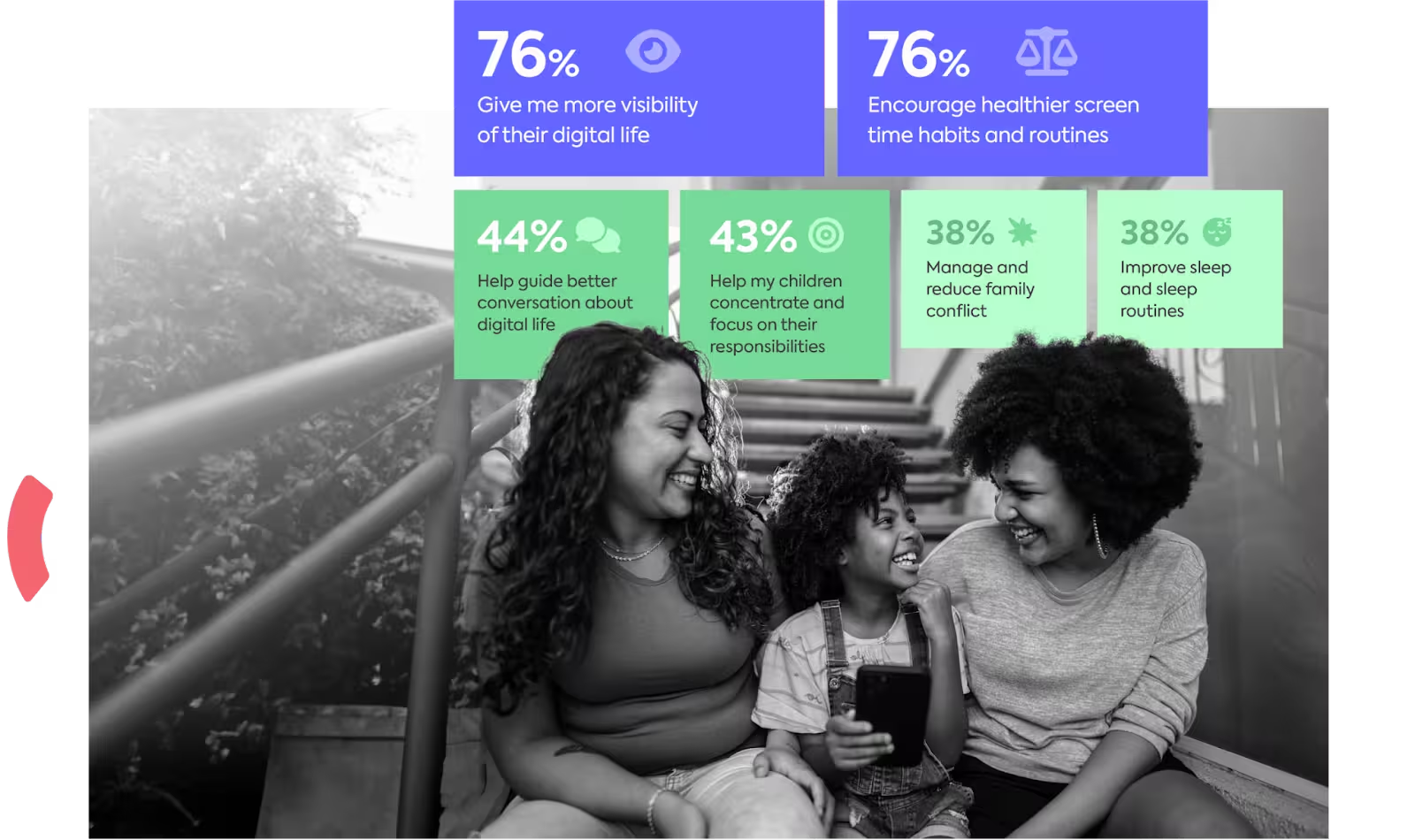
Schools already know that parents want visibility into their children’s digital activities. In the effort to better partner with their parent communities, schools can prioritize tools that give parents not only visibility but also some control in their children’s digital habits — particularly when it comes to school-issued devices that are sent home.
Parents and guardians view parental control tools as essential to their efforts to protect and guide their children; as accepted as holding your child’s hand when crossing the street, until they can be trusted to look both ways on their own.
2. Parents and guardians will need support for the rise of AI in their children’s lives.
Qustodio’s report compares the relationship between today’s younger generations and AI as a mirror to the relationship young Gen X and millennials have with the internet itself; a coming of age in tandem with technology.
While today’s children will never know a world before the internet as their older peers did, they will be the generation to navigate the world before and after AI. They will grow up as AI does, learning and discovering the possibilities — and risks — of this technology concurrently with their parents and guardians.
As the report notes, “the older generations will have to learn and adapt just as quickly, to be able to guide their children and keep them safe in new online environments.”
Qustodio’s data shows that almost 20% of children worldwide accessed OpenAI in 2023, making it the 18th most-visited website of the year. Parents and guardians are in need of support and resources that can help them keep up with the spread of AI; and schools are primed to offer this kind of support, through education and engagement. Using AI tools effectively is a skill that both educators and parents will need to help young people navigate.
Want to see how Qustodio works?
Book a free demo to see our solutions in action.

3. Often, parents are unaware of the security systems or digital wellbeing practices in place at their child’s school.
While schools are working harder than ever to put systems in place to support students’ digital safety and wellbeing, parents appear to be under-informed of these efforts.
Web filtering is an expectation at this point, and the majority of parents (56%) are aware that their schools use web filtering to block inappropriate content, followed by policies preventing the use of cell phones (54%).
Yet only 20% of parents say their children’s teachers use classroom management platforms to manage student devices, and a mere 8% of parents said their child’s school helps them manage educational devices outside of the classroom. This presents a major opportunity for schools, who often have web filtering and monitoring technologies in place that can extend into the home — and put control in parents’ hands.
Even more illuminating is the fact that 19% of parents don’t know whether any digital wellbeing support is available at their children’s schools, indicating an opportunity for schools to improve communications to parents around the tools and systems they have in place to support not only students but also the parent community.

4. Partnership between schools and parents will be key moving forward
Perhaps the biggest takeaway for schools, Qustodio’s report validates schools’ recent focus on engaging more with their parent communities to manage children’s safety and wellbeing online.
When it comes to keeping children safe online, the Qustodio report noted the variety of strategies families use (beyond just digital), with dialogue coming in as the top strategy — 87% of parents have regular discussions with their children about online habits and behavior. Yet only 24% of parents say their school provides support for parents on digital habits for children.
This presents an opportunity for schools to build a bridge.
School districts are well positioned to support parents in navigating these discussions, particularly around topics like generative AI, misinformation online and social media which are constantly evolving. It’s increasingly important for schools to provide education, resources, expert guidance and EdTech tools that can help parents take an active role in their child’s digital wellbeing and safety.
“Whether scaling back, or surging forward, we anticipate that the influence of parents and guardians will begin to play a more significant role in digital education, with schools and families working together to strike a better balance, forming a solid team that prepares children to enter the world as responsible digital citizens.”
Access the full Qustodio Report to learn more.
Learn more about Qustodio
Click to get a free demo and learn how your school district can roll out the Qustodio parental app to your parent community.
Talk to us
Talk to an expert or book a demo. Our cyber safety experts are waiting to help.
Stay in touch
Sign up for our newsletter to get all the latest product information.